Posts

Abysmal testing for lung conditions in the UK
Image
Given 20% of the UK population will suffer a long condition in their lifetime (according to Asthma and Lung UK), it is a huge shame that there is a lack of simple tests at GP surgeries for lung conditions. Every breath we take is a gift of life, yet for those suffering from lung conditions, even the simplest of breaths can be a challenge. Asthma and Lung UK has recently highlighted a concerning issue plaguing the UK's healthcare system—a lack of straightforward tests that hinder general practitioners (GPs) from making precise diagnoses for common lung conditions. This situation could have dire consequences for both patients and the NHS, particularly as winter approaches and respiratory illnesses become more prevalent. The silent struggle According to the Asthma and Lung UK charity, one in five people is affected by a lung condition at some point in their lives. These conditions encompass asthma, as well as various forms of chronic obstructive pulmonary disease (COPD), including emp...

Urgent call for government action, 'Reduce air pollution around schools'!

Image
 There are calls to reduce traffic levels around schools in the UK to help children struggling with respiratory conditions like asthma. Living streets, a UK charity that says its big ambition is that every child than can, walks to school, is recommending that traffic levels around schools should not be allowed to return to pre-covid levels. School children with asthma and respiratory conditions are said to be at increased risk of breathing difficulties and need to use their inhalers more often when their schools are located close to busy roads. A BBC reporter, Elaine Dunkley visited a UK school in an area with high levels of air pollutions and spoke to children struggling with their asthma there: BBC Report AsthmApp is a revolutionary App that helps parents and carers manage and monitor their children and ward's asthma condition. Click here to download AsthmApp from Google playstore.

Who is an AsthmApp Buddy?

Image
 The newly launched Asthma monitoring app, AsthmApp , has a Buddy system which is a key differentiator compared to other health Apps. Here is a demo of this great app, AsthmApp It is recognised that people that suffer from Asthma often need some bit of help, from the occasional encouragement to take precautions depending on inclement weather, to being there to call for help in emergency situations.  So far, no other asthma monitoring app has provided what AsthmApp now provides - a Buddy, handy to help with emergencies! This is such a welcome development that addresses an issue that many people with asthma have struggled with for years. Now with AsthmApp, users can identify close contacts that they want the app to call automatically in  an emergency. This does not replace the need for users to call emergency services themselves. Rather it is an additional help that can rouse close contacts who have been registered as Buddies on the AsthmApp system. A Buddy is not just a c...

Getting the Covid-19 vaccine

Image
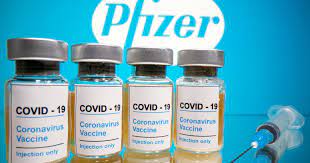
It was a good day for the whole world when it was announced that the Pfizer Covid-19 vaccine were ready for a public roll out! And much kudos to Boris Johnson and every government official that got their sleeves rolled up and supported the drive to achieve a sooner rather than later approval date for the vaccine. The United Kingdom became the first country in the whole world to lead the way not only with supporting the Oxford University vaccine development but also with fast tracking the review and approval process for the Pfizer vaccine which was approved for public use early December 2020. We are all awaiting the final tests and approval for the Oxford vaccine which is said to have a higher efficacy across all age groups, is said to be ten times cheaper, and easier to transport and store compared to the Pfizer vaccine. Next step Please wait to be contacted if you have asthma and would like to receive the vaccine. The government has a rollout plan for the whole of UK and different g...

Benefits of taking a PEF reading

Image
Peak Expiratory flow (PEF) measurements are simply a measurement of how quickly one can blow air out of the lungs using a simple flow meter. These hand-held flow meters measure air breathed out in litres per minute (l/min) with the measured value displayed on the side of the PEF meter. Expectations of how much air you can blow using the meter varies based on age, height and gender . Peak expiratory flow measurements can sometimes be used to diagnose quickly if someone is having an asthma attack. If you are not breathing in air well into the lungs, there is no way you will be able to breathe a big volume of air out into the meter. Imagine your usual PEF reading is around the 500 mark. Recording, say a 300 reading, when the asthmatic patient is feeling unwell is a sure sign that the asthma condition could be flaring up and the airways are getting narrow. The user may need to ask for help at this time. Apart from helping to determine if an asthma attack is taking place, PEF readings...

Inhaler types and their uses

Image
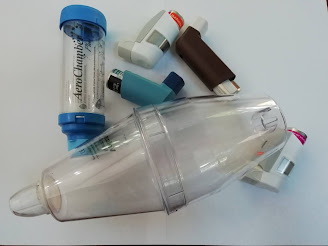
Depending on where you look, there are said to be two or three major types of asthma inhalers.  Some health professional insist there are two types…and even those that agree that there are two main types disagree on the categorisation! Some say that the two types of inhalers are – Preventer inhalers and Emergency inhalers.  Others say the two main types of inhalers are: Metered dose  inhalers (MDIs) and Dry powder inhalers. And yet, some other health professionals suggest that there are three types (or classes) of inhalers – preventer inhalers, emergency inhalers and combination inhalers! All in all, it’s safe to say, there are so many types of inhalers available to treat your asthma condition and you should check out what your doctors have prescribed and ask questions if you don’t understand why you have been prescribed the particular type of inhalers you have. We tried our best to see if we could summarise the types of inhalers and eventually decided to ...

What is an asthma incident?

Image
An asthma attack happens when the asthmatic person has bouts of wheezing, coughing, daytime fatigue, sleeplessness or shortness of breath.                                                © EAACI on Twitter: The state of asthma epidemiology Sometimes, this asthma bout passes with the use of an 'emergency' inhaler, and one is not sure if it was a 'full blown; asthma attack or not. Whether it is recognised as an asthma attack or simply an asthma incident, it is recommended that one makes a note of exactly what happens, situation preceding the happening, and how long it occurred for, for further review by health professionals.   Is it easy to recognise an incident happening? Obviously for many people, they recognise when they are getting breathless or feeling faint. And when such happens, it is easier to ask for or get help. The worrying thing is, for many asthmati...

A healthy pulse

Image
 Your pulse is the rate at which your heart beats per minute, that is, a count of how many times your heart beats in a minute (Beats/min or BPM).   Your pulse varies depending on what you are doing at the moment. As an example, if you are lying down resting or sleeping, your heart rate would be lower than when you are running or exercising. Knowing your normal pulse is important because it is a reflection of how well your heart is functioning. The heart being a central organ for the whole body, circulates oxygen and nutrient-rich blood throughout the body, and if it is not working properly, just about everything in the body is affected. How normal is your pulse? Everyone’s pulse is different and even for each person, as mentioned above, the pulse could vary depending on what you are doing at that particular instance. It is good to keep a track on how your pulse varies. A useful tool for this is  AsthmApp  which allows you record and store your heart rate, breathi...

Recently diagnosed with asthma?

Image
  There is never a good time to get diagnosed with asthma. And if you have recently been diagnosed with asthma, in these days of Covid-19 where patients are being managed with as little in-person contact as possible, the situation gets even more difficult. What should you do if you have recently been diagnosed with asthma? Keep a diary of any bad day and begin to build a picture of what triggers your asthma attack. See our article on how to know your asthma triggers here Use your preventer inhaler as prescribed by the doctors. You may need to keep one handy at all times. Imagine if you forgot to take your inhaler before leaving the house for work in the morning (assuming you are not homeworking like everyone else right now)! You don’t want to get to the office and then have to decide whether to drive back home or miss your morning dose entirely. Having a spare preventer inhaler in your car or in your office locker certainly helps, believe me. Keep a close eye on your blood ...

Asthma triggers

Image
Do you know what sets off your asthma? Did you know that asthma triggers can vary from person to person? A person living with asthma has airways more sensitive to certain things than that of people without asthma, and so their airways can get more inflamed easily by certain triggers. If you are going to manage your asthma well, you have to understand as a person what triggers your asthma, so you can stay safe and well as much as possible. What is an asthma trigger? An asthma trigger is anything that can set off your asthma symptoms. Common triggers include colds & viruses, pets, dust mites, cigarette smoke, alcohol, cold weather, chest infection, pollen, exhaust fumes, emotional stress etc . The chart below - copyright Daily Express - shows the Top 10 causes of asthma attacks in the UK in 2018. You may have just one or two triggers, or several. And some triggers are easier to pinpoint than others. For example, you may notice that anytime ‘Neighbour A’ visits, you have a sneez...

New website launch. Check it out!

Image
 We’ve launched our website www.asthmapp.com! The new website has been months in the making as we have been working to put together a great website for our Customers. We want to be the one stop site for all your asthma tips and help resources. Our App is planned for launch in February 2021! You can now pre-register to download it for free, on our website. In the meantime, we are going to be regularly adding useful links to our website; post medical stories that are helpful including what you can do as a person to improve your own health; and even success stories as reported by our Customers. So keep our website on your favourites list. Our website is now fully live and you can contact us with your questions or suggestions of topics you would like us to research on for you. You can also send us articles and news stories you have found useful. Our contact email is info@asthmapp.com .   Welcome to our new website  www.asthmapp.com!

Covid 19 and your asthma

Image
In December 2019, a worldwide health pandemic, quite unexpected started. Coronavirus, a virus previously known to occur only in animals found its way into humans and everyone was unprepared for it! Covid 19 became the most popular word suddenly globally. So far, known symptoms of Covid 19 include: Fever, cough, new loss of taste or smell, shortness of breath, muscle fatigue; body aches, chills, sore throat, runny nose, diarrhea, nausea or vomiting. Within a few months, Covid 19 had completely changed the way of life of most people globally - schools were closed; shops were closed; public gatherings were cancelled; and big hospitals sprang up in open spaces in a matter of days.   For those with Chronic Obstructive Pulmonary Disease  ( COPD) which includes asthma, Covid 19 became a new major risk they now have to be aware of.   If you develop symptoms of COVID-19 and have asthma, use the 111 coronavirus online service to get advice about what to do. Call 1...